


There are seven common mistakes that people frequently make when designing their home. These mistakes are often reinforced in home design magazines and television shows. Explained below are the seven most common mistakes and what you can do to avoid them.
This article has been written from an Australian perspective. If you live in North America, Europe, or elsewhere in the northern hemisphere, reverse the north/south orientations mentioned below.
Video
1st deadly sin: Not orientating living spaces north
This is the biggest mistake most people make when designing their home. There is nothing worst than living in a home that is cold in the winter and hot in the summer. But you can have both.
Ideally, orientate all bedroom & living areas to face north. This will provide perfect sun penetration to every room in the house. But realistically this is impossible for most homes that are restricted by the average suburban block. The following rules generally apply for typical suburban blocks.
.jpg)
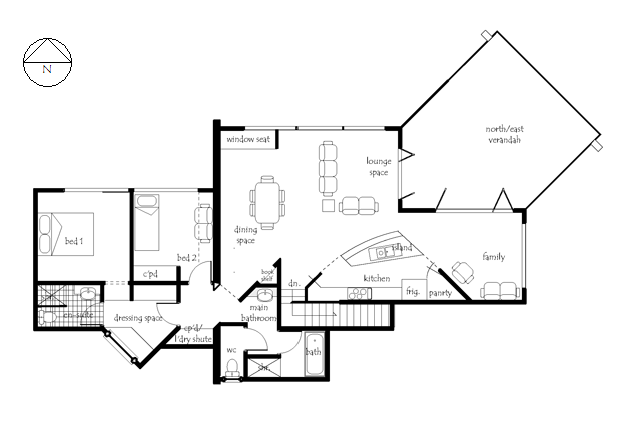
- Locate all living areas on the north side of your floor plan. The floor plan shown here has good northern sun penetration through northern facing windows and was created using the Planit2d 2D Floorplan creator.
- It is preferable to locate the kitchen to the north/east so you can enjoy the beautiful morning sun while sipping your cup of tea.
- The main bedroom is preferable on the north/east if you are a morning person and will also be totally protected by other internal spaces from the brutal western summer sun.
- All bedrooms should be protected from the western afternoon sun in summer as much as possible - buffer the bedrooms with the laundry, store rooms, the garage or a heavily insulated walls face west.
- Window overhangs and shading - 900mm roof overhang is the optimal roof shading depth over windows to the north, on home sites with excellent sun penetration (if your site is shaded by trees or neighbouring house you will need to vary this accordingly).
- Avoid having any windows and doors on the west side of the home, unless a small high window is necessary for ventilation. If western windows cannot be avoided (due to views etc) consult a building design specialist.
- Insulate all external walls, ceilings and roofs. Ceiling and roof insulation are two different items and you should have both to ensure your home is thermally comfortable throughout the year.
 Roof insulation (this doesn't include reflective sarking) - is required to keep summer heat out of the roof space.
- Ceiling insulation - is to keep heat inside your home during winter and to reflect summer heat penetration from the roof area.
The 2nd deadly sin: Not enough research
Many people don't research enough before they purchase their property. Site constraints will greatly affect the design of a home and resulting construction costs. So it's very important to purchase well informed to avoid headaches with the plan function and budget blowouts.
Remember these few points before buying your property
- Site slope - The flatter the site the more economical it will be to build.
- Question your local council - Call your local council and ask as many questions as you can. Always ask, "Is there anything else I should know or is there anyone else I should speak with?" If you don't ask - quite often you won't get all the information you need for a well informed decision.
- Uncommon land zoning - In Australian most residential lots are zoned 2a or 2b. An uncommon land zoning (such as 7a) may require that Flora and Fauna studies be carried out. This report and others will add to development costs and may restrict building envelopes and house siting.
- Avoid geotechnical nightmares - Think twice about purchasing sites that; are steep or rocky, have clay substrates, noticeable fill or are surrounded by lots of vegetation. These blocks will require extra investigation by Geotechnical Engineers.
- Bushfire prone land - If your site is considered prone to bushfire attack (by the Rural Fire Service) your budget could also suffer another blow during the council approval stage. Bushfire reports and sprinkler systems maybe required before your development can become a reality.
The 3rd deadly sin: Too open plan
Open plan is not the 'be all and end all' and can often cause privacy and acoustical problems difficult to reverse.
The modern trend for living spaces is to actually design houses so that there's a good compromise between the large open plan spaces and the intimate cosy spaces. Large open internal spaces, combined with flat walls and hard floors increase the internal reverberation of all noises created inside and outside the home.
The reflection of noise (reverberation) can be reduced by:
- Designing open plan areas with a few more walls and doors than you had planned on. See the "Quiet open plan" example below (as versus the nosier open plan formations shown in the "first deadly sin" section). The changes are very subtle but very effective.
- Installing a more absorbent flooring, such as modern rubber, new age linoleum, cork or carpet.
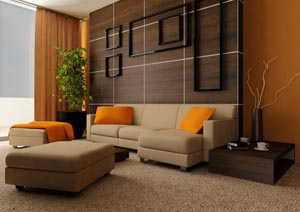 Apply "soft" furnishings to windows - These may include: curtains and blinds as they absorb more noise than timber shutters or no treatment for example.
- Use soft fabrics on lounges, extra cushions and large rugs - they all absorb small amounts of noise.
- Plan to have standard height ceilings - 2400 or 2700 - to reduce noise.
- Install noise reducing products - The major building product manufactures produce speciality acoustic insulation batts as well as panel applications to reduce noise entering spaces & reverberating. Also speak with your local paint supplier about liquid acoustic applications.
The 4th deadly sin: Not designing your house for your family
For example if you have a partner and three small children the following would need to be expressed in the design program:It is very important to analyse the way you and your family live and ensure this is reflected in the design of the home. Getting this right at the start will reduce the chances of renovations later to cater for your family needs.
- Family/play room - to be located next to kitchen which has doors out onto a sunny and safe outdoor play area - the kitchen can view this outside space easily.
- Lounge area - close to kitchen but can be acoustically cut-off from noisy areas such as the kitchen and family room.
- En-suite in main bedroom - very private from main area of bedroom - not to open onto main area of bedroom.
See more about designing your own home here.
The fifth deadly sin: Inappropriate external finishes
Undertake some essential research to ensure you are able to make a well-informed choice about how your house will fit into the landscape.Once the final moments of construction are coming to completion it is easy to rush the final finishes and paint colours. Take your time - a rushed or forced decision can make or break the visual appeal of your home and possibly future resale.
- Pick external building claddings that age well. Note: clay bricks will only date well if they are of good quality and are used appropriately.
- Look through old magazines/books from second hand retailers to see what would still look good today.
- Drive through your neighbourhood - What products fit into the local area?
- Talk to people who are building. Tell them about your project. It's amazing what kind of leads you can get by just talking to anyone...
- Get well informed about any choices you need to make and beware of people that try to persuaded you by saying, "trust me I've been doing this for years", what this usually means " Let's do it my way and when you're not happy with the final product I'll charge you to fix it!" You need to feel confident about your decision and keep asking questions until you do.
- Visit your local real estate agent and ask them what they think about external and internal finishes and resale - BTW take note of these ideas but don't adopt any if they can not work in with all the other things you are trying to juggle into the design.
The 6th deadly sin: Making spaces too big
People usually over compensate in space in the wrong areas. When professionals are costing new homes they generally describe spaces in /m² costs, so if you're on a budget only make it as big as you really need.
Reduce the size of your home by including multifunctional areas with out reducing the spacious quality you're looking for:
- Reduce halls areas but don't reduce the width to less than 1000mm (1 metre)
- Ask yourself "Can I deal with a Plantation Louvered fold-away laundry in the bathroom instead of a separate laundry room?"
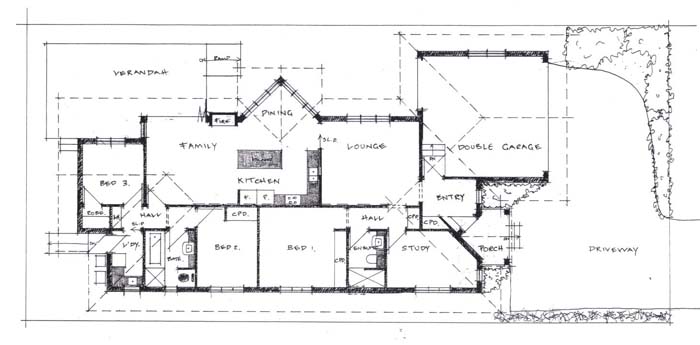
- Think about designing the "tv room" to be easily converted into a guest bedroom with a bunk bed "pod" instead of two separate rooms (see floor plan below).
- Plan your furniture to fit into a space well - windows that go to the floor do not work well with furniture planning.
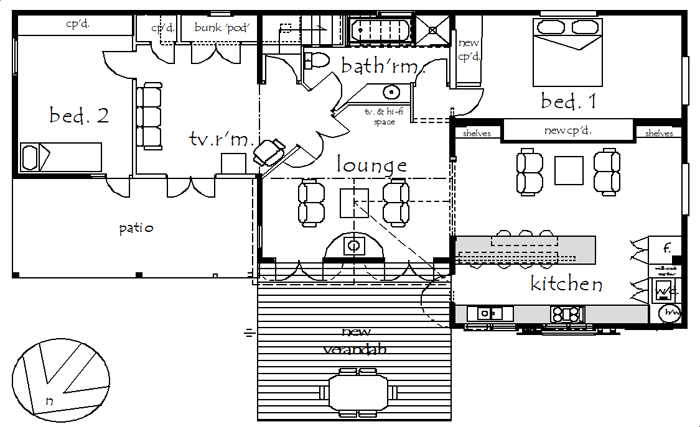
The floor plan above show the tv room is also suitable for use as a guest bedroom with direct access to the bathroom.
The seventh deadly sin: Not using standard construction techniques and materials
Keep it standard silly - Using standard construction methods will keep the costs of your building down.
For example:
- Use 2400mm high flat ceilings - any higher and costs go up - raked ceilings are even more.
- Square set or shadow line corners are lovely but they're more expensive than traditional cornices.
- Detailed lighting bulk heads look great but they will also cost a bundle.
- Use prefabricated trusses in roof construction - Rafters cost more and are more expensive to finish & maintain.
- Only design large spans where you need to. This will reduce the requirement for engineers details - another extra cost.
- Single skin timber stud framing is the most cost effective wall construction type to install and alter in the future if required.
- Sub-floor construction - The most economical is concrete pad footings with brick piers, supporting a timber floor frame. Concrete is expensive, and is not as cost effective as timber framed construction.
- Avoid wall mounted lights (wall washers) that illuminate down the wall - this will require the plaster finish to be of a top level of finish - very costly. See more here on plaster level finishes.
The trick of designing a well functioning home can be difficult for the lay architect and there will be many people during the construction process that will influence the final built product. You need to keep these influences in check and remain focused and vigilant about keeping your original design ideas in your plan.
Yes, designing and building a house can be an unrelenting juggling act but if you at least plan to avoid the seven most common design mistakes hopefully it will result in a functional and cost effective house that will sit well in the local landscape.