
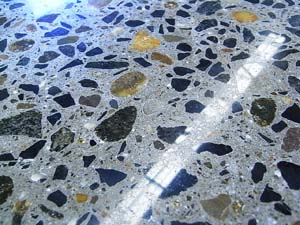
Polished concrete floor by Grind & Shine
Over the last 10 years or so polished concrete flooring has been a popular flooring choice in high-end architectural homes. Until recently polished concrete for the average home was seen as too industrial, but not anymore. Concrete floors are relatively easy to polish, and are hard wearing, easy to maintain, very cost effective, sleek looking and will last more than a lifetime.
Concrete flooring is practical for both indoors and outdoor use and can look fabulous in all areas of the home, not just bathrooms & kitchens. Polished concrete is not limited to flooring either. See our article on Polished Concrete Bench tops and Furniture.
Types of concrete flooring
Polished concrete flooring is categorised into two types of flooring:
1. New concrete floors
2. Retrofit concrete floors (concrete floor renovation)
New - Polished concrete flooring
New concrete floors require less work resulting in lower costs, but there are a few things you need to be aware of:
a. Slab aggregate – Standard concrete comes with either brown river stone or black basalt aggregate. Your slab needs a high amount of aggregate and you need to know what it will look like before your order the concrete. Discuss the aggregate type with the concrete supplier, however you will be able to add a portion of interesting aggregate to the concrete to make it unique. The interesting aggregate can be almost anything including; coloured glass, shells, memorabilia and even fossils.
b. High slab finish - The surface of the concrete will need to be finished to a high standard to ensure the best polished result. Speak with your concretor before the concrete is poured and tell them about your plans of having a polished concrete floor. This will ensure that the surface will be as smooth as possible.
c. Inlays - During the finishing phase, when the wet concrete is being smoothed decorative aggregates such as seashells or car parts can be pushed into the surface of the concrete. The pieces need to be pushed into the concrete about 1 mm in.
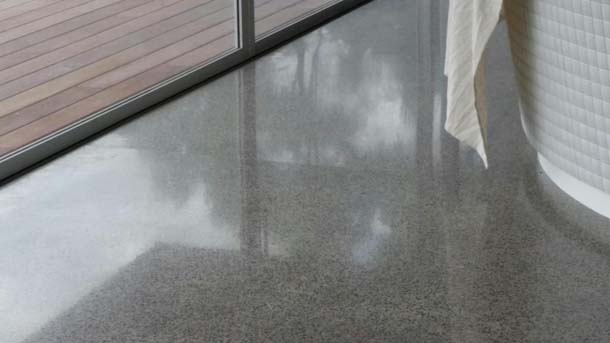
Polished concrete floor by Grind & Shine
Retrofit - Renovated polished concrete
In the flooring industry, if a floor is being replaced by another it is called a Retrofit. Retrofit concrete floors use a technique called concrete resurfacing. Concrete resurfacing can be done in one of two ways:
1. Raw cut – The existing floor slab is sanded and the natural aggregate will be the feature (usually black basalt). Before you choose this method it is wise to test the slab (in a non-visual area) to find out what type of aggregate is in the slab as it maybe not what you are expecting.
2. Toping slab – This method sees 50mm of new concrete applied to the top of the existing concrete slab. This option provides the opportunity to choose the aggregate in your slab, but there is a big downside. If you add 50mm of concrete on top of your concrete slab it will reduce the height of your ceilings and all door openings. This option is better suited to older homes or houses with higher than normal ceilings. Keep in mind that standard finished ceiling height need to be no less than 2400mm high to comply with Australian Building Codes. Finished door heights need to be a minimum of 2040mm.
The process
1. The concrete floor will need to be sanded (cut) 3-4 times with special diamond headed sanding discs, depending on the finished surface and the desired aggregate exposure. This can be done wet or dry depend on the site situation, This process will remove 3-5mm of concrete thickness. If it’s possible try to sand the floor before all the walls are erected. This will: reduce costs, keep mess to a minimum, ensure a higher quality finish and reduce sanding period.
2. After the first cut the surface is then grouted with cement to allow imperfections such as air bubbles to be filled.
3. Two more cuts are done after grouting.
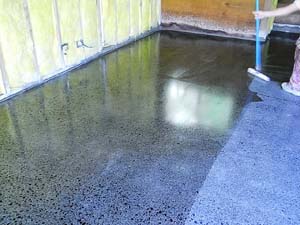
Indensifier being applied
4. A clear liquid hardener (indensifier) is then worked over the surface with a window squeegee like tool. The indensifier provides a very glossy look to the finished floor and gives the floor extra strength. The indensifier is worked into the slab for about 1 hour and will soak into the slab 5-10mm. This will require overnight curing before more cutting is done.
5. The concrete floor is then cut again – this is the final polishing stage.
6. Lastly all the concrete floors are to be sealed. There are two main types of finishes:
a. Diamond finish – This is where the concrete is sanded 3-4 for times with varying grades of sanding paper and sealed with a standard stone or tile sealer.
b. Epoxy finish – This method sees a thick epoxy coating applied in two layers. Sanding is required after both layers with varying grades of sandpaper.

Epoxy partially applied. Photo by Grind & Shine
Maintenance and other facts
- Sealing systems reduce oil staining and reduce mould build-up in wet areas.
- Concrete floors will not chip or dent like softer surfaces such as timber and is easy to maintain. Mopping with warm soapy water once a week is the only maintenance required.
- Polished concrete flooring can actually be warm underfoot. Concrete provides thermal mass to a home and if your home is designed correctly the concrete will be warm in winter and cool in summer (speak to a building designer or an architect for more information).
The cost of polished concrete flooring
Producing a polished concrete floor from a new concrete slab is similar in cost to a Cypress Pine timber floor. Retrofits are more expense as the job requires working around walls and removing existing floor coverings.
The cost of polished concrete floors is offset by virtually no maintenance costs. Timber floors, for example, have a relatively high maintenance cost and are not nearly as durable. Contact one of the businesses listed below for a comparison quote.
Find a concrete polisher in your area
See our list of concrete polishers.
More flooring articles
Selecting flooring. Choosing the right floor for you in 4 easy steps.
Choosing a timber floor. When it comes to choosing timber flooring, here are the six most important steps to consider.
Did you know that timber flooring has a limited life? Read more on the subject in this article: Timber Floor Sanding & Polishing .
Footings & floor construction. This informative article is for readers who are interested in the construction process.