
Drawings are only a small portion of what councils in Australia require to enable them to give consent to your development application, building permit or building licence. Reports such as Statement of Environmental Effects, BASIX (in NSW), waste management reports, geotechnical reports, landscaping plans and more may need to be lodged with your plans. To determine exactly what is required by your local council you will need to contact them directly or visit their web site.
What is the BASIX report?
BASIX is the acronym for "Building Sustainability Index". Since October 2006 all development applications lodged in NSW for new homes, renovations and additions valued over $100,000 must contain a BASIX certificate. Applications for installing a pool or spa must also include a BASIX certificate. The BASIX certificate pledges the homeowner to water and energy saving commitments that must be verified by an accredited certifier before an Occupation Certificate is issued.
BASIX - Renovation case study
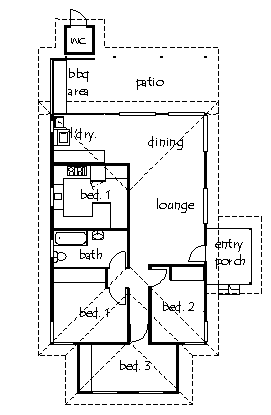
Paul and Jenny's home is located in Umina on the Central Coast one hour from Sydney. The dwelling is a small 3 bedroom home with only one living space. It is the owner's intention to make an addition to the home as well as improve the functionality of the existing plan. The construction type will consist of a timber roof, wall and floor structure and it will be supported on brick piers and clad in weatherboards and "colorbond" roof sheeting.
 |
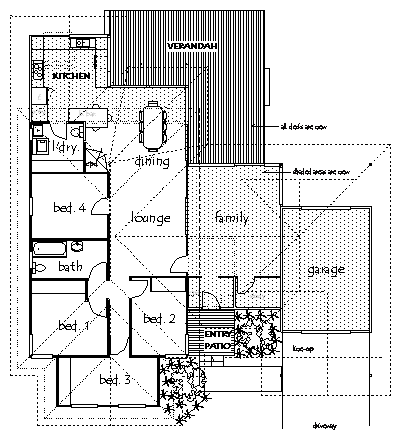 |
| before | after |
Paul and Jenny are making the following energy and water saving commitments:
- Window and door overhangs have been increased from 600mm to 900mm providing maximum sun coverage in the summer and maximum sun penetration in the winter
- Large windows and doors have been added on the North and East to keep living areas warm in winter. Note: Windows sizes on the south and west should be kept to a minimum size to reduce heat loss in winter and heat gain in summer
- Insulation has been added to all roof areas and external walls of the new addition. Note: the higher the insulation's "R" value the warmer you will be in winter and the cooler you will be in summer
- Energy saving light fittings and globes will be installed into as many areas as possible. Note: there is now a good range of energy saving fittings and globes on the market that can be installed in wet areas, halls and bedrooms - allowing energy saving in these areas. Unfortunately there is a very limited selection of energy saving feature lights for areas such as living rooms and dining areas but BASIX does factor this issue into its calculations. The BASIX certificate will encourage the renovator to a 40% energy efficient light commitment on new or altered lighting.
- All taps will have a minimum rating of 3 stars
Below is a copy of a portion of the BASIX certificate commitments for this study: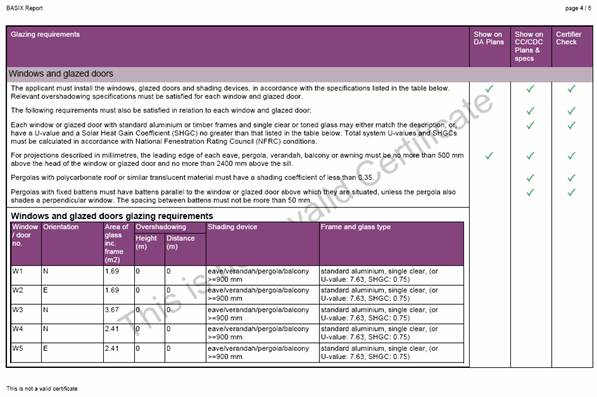
Source: http://www.basix.nsw.gov.au
Note: certificates must be generated online, so if you are not so computer literate you will need to engage a third party to create your BASIX certificate.
BASIX - Conclusions
Within the construction industry there are mixed opinions about the effectiveness of the BASIX certification process as a water & energy saving tool but in this author's opinion it is an excellent guide for home owners and the BASIX certification process will ensure that people reduce energy and water consumption while minimising changes to the construction process or the occupants lifestyle.
Statement of Environmental Effects
The Statement of Environmental Effects (SEE) is a written report that is now a standard application requirement in most NSW councils. It supports the drawings and describes how the application will comply with all council's development control requirements and how the development will blend with the existing character of the locality etc. Click the following link to view an example Statement of Enviromental Effects.